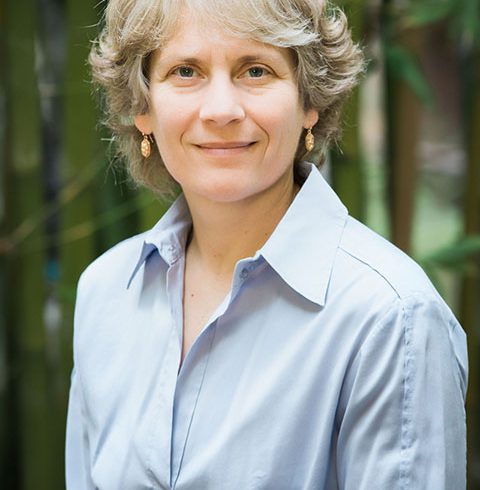
Carolyn Ruth Bertozzi was born in Boston, Massachusetts, on 10th October 1966. She is a pioneering American chemist whose work has profoundly influenced the fields of chemical biology and biochemistry. Her life and career are a symbol of intellectual curiosity, groundbreaking research, and a commitment to translating scientific discoveries into practical applications. Bertozzi’s academic journey began at Harvard University, where she earned her B.A. in Chemistry in 1988. She then pursued her Ph.D. at the University of California, Berkeley, under the guidance of Professor Mark Bednarski, focusing on the synthesis of carbohydrate-based compounds. It was during this time that she began to develop the foundational concepts that would later define her research. Following her doctoral studies, she completed a postdoctoral work at the University of California, San Francisco, with Steven Rosen, where she studied the biological roles of carbohydrates, particularly their involvement in cell-surface interactions.
In 1996, Bertozzi returned to Berkeley as a professor, establishing a research group dedicated to the field of chemical biology. Her early work focused on understanding the roles of glycans (complex carbohydrates) on cell surfaces, particularly in diseases like cancer and inflammation. Recognizing the limitations of existing methods for studying these molecules, she began to develop innovative chemical tools to visualize and manipulate them. This led to her most significant contribution: the development of ‘bio-orthogonal chemistry.’ Bio-orthogonal chemistry refers to any chemical reaction that can occur inside living systems without interfering with native biochemical processes. Bertozzi and her team pioneered this concept by designing reactions that are fast, selective, and non-toxic to cells. The most famous of these is the Staudinger ligation, a reaction between an azide and a phosphine that can be used to label molecules in living cells. This was followed by the development of the copper-free click chemistry, which is even more biocompatible and has become a standard tool in chemical biology. The impact of bio-orthogonal chemistry has been immense. It has allowed scientists to study a wide range of biological processes in real-time, including protein trafficking, glycan metabolism, and drug delivery. It has also enabled the development of new diagnostic tools and therapeutic agents. Her work has been instrumental in creating new ways to target and treat cancer by developing antibody-drug conjugates that specifically deliver chemotherapy to tumour cells.
Bertozzi has received numerous accolades for her groundbreaking work in biological chemistry, including the prestigious MacArthur “Genius” Grant in 1999 and the Lemelson-MIT Prize for Innovation in 2010. In 2022, she was awarded the Nobel Prize in Chemistry, along with Morten Meldal and K. Barry Sharpless, for her development of click chemistry and bio-orthogonal chemistry. This recognition solidified her status as one of the most influential chemists of her generation. Currently, Bertozzi is a professor at Stanford University, where she continues her research in Chemical Biology. Her work not only advances the fundamental understanding of life but also provides the tools necessary to develop the next generation of medicines and diagnostic technologies.