Hiranya Kr. Bhattacharyya
Associate Director of Extension Education (Veterinary), AAU, Khanapara
Probodh Borah
Director of Research (Veterinary, AAU, Khanapara
Introduction
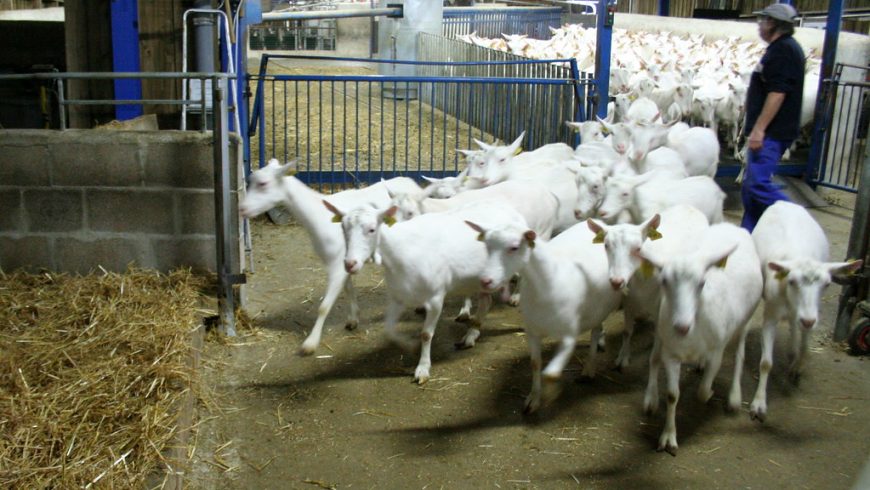
Livestock is crucial to India’s rural economy, supporting both livelihoods and nutritional security. The Periodic Labour Force Survey (PLFS) Report 2022-23 of MoSPI states that 6.45% of the population is involved in animal production and 3.63% in mixed farming (Annual Report, 2023-24). Goat farming has become an important part of livestock, playing a key role in helping smallholder and marginal farmers and adding significantly to India’s rural economy. In 2012, over 33 million rural households were employed in this sector, highlighting its importance for rural livelihoods (Thirunavukkarasu et al., 2022). Goat farming in India mostly operates with low inputs, and flock sizes vary widely across regions. These animals are raised using different systems, including stall-fed, semi-intensive, and migratory methods, offering flexibility based on local environmental and economic conditions. According to Hegde and Deo (2015), about 50% of India’s 138.27 million rural households rear goats, with flock sizes typically between 3 and 5 animals. Some states, like Haryana (Kumar et al., 2024) and Gujarat (Sorathiya et al., 2016), report larger flock sizes of 40-50.
In addition to generating income, goats serve as a liquid asset that can be quickly sold in times of emergency, thereby functioning as a form of financial security and collateral. By 2019, the goat population had increased to nearly 148.88 million, accounting for a 10% increase over the 19th census (Nagar, 2022), and projected to reach 216 million in 2050 with the production of 9.77 million tons of milk, 1.36 million tons of meat, and 0.25 million tonnes of skin (Vision, 2050).
Goats are adaptable and can thrive in diverse agro-climatic conditions, requiring low inputs, which makes them ideal for low-income regions like Assam and the North-Eastern Region of India. Due to their multiple adaptive traits, goats can survive in harsh and changing environments. Their advanced thermoregulatory mechanisms enable them to naturally withstand heat stress and dehydration (Gaughan et al., 2019). Their selective grazing behaviour, combined with an efficient digestive system, allows them to maximize feed intake and nutrient utilization even in areas with limited or low-quality forages. Goats can lower their metabolic rate during times of resource scarcity, helping them conserve energy more effectively than many other livestock species (Silanikove, 2000). Nair et al. (2021) highlighted that goats are more resilient than cattle and sheep in tolerating heat stress and scarcity of feed and water. They can also utilize plant materials that are typically indigestible to other ruminants in degraded or nutrient-poor pastures, making them promising livestock for meeting the demands of a rapidly growing human population. Their relatively low methane emissions further improve their suitability for climate-smart livestock systems (Thirunavukkarasu et al., 2022).
Out of the 138.27 million Indian rural households, about
50% families maintain goats
Out of the 138.27 million Indian rural households, about
50% families maintain goats
Out of the 138.27 million Indian rural households, about
50% families maintain goats.
Out of the 138.27 million Indian rural households, about
50% families maintain goats.
Historical Origins, Domestication, and Evidence
Goats were among the earliest animals domesticated by humans, with DNA evidence suggesting that their domestication occurred approximately 10,000 years ago (Saeid et al., 2008). Neolithic societies relied on wild goats not only for milk and meat but also for dung, which served as fuel, and for bones and hair, used in crafting tools and garments (OSU, 2025). Over centuries, goats have remained a symbol of sustainability, resilience, and adaptability in both settled and pastoral communities.
Culturally and religiously, goats hold significant symbolism. In Hinduism, goats are often associated with ritual offerings and deities. The Shiva Purana mentions Daksha, who was revived with a goat’s head after being destroyed by Lord Shiva. In Islam, goats are sacrificed during Eid al-Adha, indicating obedience to God (Anonymous, 2025). In Judaism, goats are considered kosher and clean animals, their horns used in religious ceremonies (Wikipedia, 2025). The Goat is also associated with the zodiac sign – the Capricorn, which reflects an ambitious realist (Sushil, 2023). Reports suggest that Mahatma Gandhi included goat milk in his diet due to its perceived health benefits (Aravind, 2019).
Population Data: Assam, India, and Global Context
The global goat population has increased from less than 400 million in the early 1960s to over 1 billion in 2018 (Lohani and Bhandari, 2021). Between 1991 and 2011, goat populations grew by 55%, while cattle increased by only 9%, and sheep decreased by 7%. The significant growth of goat populations in Asia (57.7%) and Africa (35.7%) underscores the vital role goats play in supporting the livelihoods of smallholder communities.
India holds the top rank in the world in goat population, accounting for 13.64% (150 million out of 1.1 billion globally) as of 2022 (World Population Review, 2025). Goats contribute 27.8% of the total livestock population in India. The 20th Livestock Census (2019) recorded a population of 148.88 million goats in India, a 10.14% increase from 135.17 million in 2012 (PIB, 2024).
Among the Indian states, Rajasthan leads with 20.84 million goats, followed by West Bengal (16.28 M), Uttar Pradesh (14.48 M), Bihar (12.82 M), Madhya Pradesh (11.06 M), and Maharashtra (10.60 M) goats (DAHD, 2019). India has 41 recognized goat breeds (ICAR-NABAGR, 2025), grouped into Milch, Dual-purpose (milk and meat), Meat-purpose, and other dual-purpose (meat and fibre) categories (Rai et al., 2005; Singh et al., 2008; Singh et al., 2023).
Out of the 148.88 million goats in India, 69.65 million are milch animals. However, the genetic quality remains an issue; only 27.4% are purebreds, 9.1% are graded, and the remaining 63.5% are non-descript (Nagar, 2022). Assam’s goat population has fluctuated: increasing from 21.3 lakh in 1992 to 61.6 lakh in 2012, then dropping to 43.1 lakh in 2019. Despite this decline, goat meat made up a significant part of Assam’s meat production, averaging 28.43%, nearly double the national average of 15.39% (Raj et al., 2015).
Suitability and Adaptability of Goats
Goats are ideally suited for India’s diverse agro-climatic zones, which range from arid deserts to humid tropics, because they can survive on poor-quality roughages and adapt to tough environments (Godara et al., 2024). This makes them especially valuable for states like Assam, where terrain, humidity, and rainfall patterns vary greatly from the rest of the country.
Assam Hill Goats and Black Bengal goats are particularly well-suited to this region. They are recognized for their higher resistance to disease, high reproductive rates (kidding every 8 months), and excellent meat quality. The local climate (24°C-36°C) and vegetation are highly favourable for goat rearing, providing both primary and supplementary income for many households. Besides their adaptability, goats help manage vegetation by grazing on weeds and bushes, preventing overgrowth and supporting land sustainability.
Milk and Meat Production: India and the World
Goat Milk Production
Goat milk is nutritionally superior in several aspects; it has higher alkalinity, smaller fat globules, better digestibility, and a lower allergenic potential compared to cow’s milk (Panta et al., 2021). It is often recommended for those suffering from gastrointestinal issues, eczema, asthma, and even peptic ulcers (Zenebi et al., 2014; Fantuz et al., 2016).
Goat milk production globally rose from 11 to 18 million tonnes between 1993 and 2013, a 62% increase (Haenlein, 2017). Producing 6.09 million tonnes annually, India leads the world in goat milk production. This output contributes approximately 3% of the national milk pool, making goats the third most significant milk-producing livestock species (DAHD, 2019).
Approximately 79.5% of India’s goat milk production comes from five states -Rajasthan, Uttar Pradesh, Madhya Pradesh, Gujarat, and Maharashtra. However, India’s goat milk productivity has remained low and stagnant over the last decade at approximately 0.46 kg/day (Singh et al., 2023). Moreover, India has witnessed a reduction in its dairy goat population (DAHD, 2019). However, in Assam, unlike some Indian states, goats are generally not reared for milk; instead, most farmers prefer goat farming primarily for meat production.
Goat Meat Production
Globally, around 440 million goats are slaughtered annually, yielding 6.37 million metric tonnes of meat (Wikipedia, 2025). Key Asian producers include China, India, Pakistan, Bangladesh, and Iran, while Nigeria, Kenya, Ethiopia, and Sudan dominate in Africa. India contributed 0.6 million metric tonnes of goat meat to its total meat output in 2015, derived from slaughtering 41% of its goat population, which constituted 8% of national meat production (Raj et al., 2015).
In Assam, goats are now reared primarily for meat production, and not for milk, because of suitability, cultural practices, and consumers’ preference to goat meat rather than to goat milk. The growth rate of meat production is higher than that of milk in Assam, unlike that of India, when compared from 2007-08 to 2023-24, resulting in the production of a prominent share in the meat sector. Between 2007-08 and 2023-24, goat meat contributed an average of 28.43% (ranging from 22.58% to 32.48%) to Assam’s total meat production, ranking second after pork, which constitutes approximately 40% (36.6 to 44%) during the same period. This figure represents an increase of approximately 87% over the national average of 15.39% for the corresponding period. The year-to-year growth and CAGR of goat meat production in Assam are prominently higher than the national average, highlighting strong market demand. The goat slaughter growth in Assam (CAGR: 6.22%) is also higher than in India (CAGR: 3.58%) during 2007-08 to 2023-24, despite a decline in its population in 2019 as compared to 2012. Although more goats are slaughtered than pigs in Assam, pig meat production is higher because pigs yield 4-5 times more meat per animal, underscoring the need for selective breeding, improved feeding, and better healthcare practices to enhance goat productivity and increase body mass yield per animal. With continued support to smallholder farmers through government schemes, the sector is expected to witness further growth in Assam in the coming years.
Need for Genetic Improvement and Sustainable Practices
Despite the significance of goats, India lacks a robust genetic improvement program. Indiscriminate breeding by smallholder farmers has led to a decline in genetic merit, affecting productivity. Selection breeding through performance recording is essential to identify and multiply quality (seed) animals of higher genetic value (Solomon et al., 2014).
A collaborative effort involving government agencies, research institutes, universities, the private sector, and farmers is necessary. The Public-Private-Partnership (PPP) model is recommended for sustainable breed improvement and enhanced productivity through value-chain interventions (Lohani and Bhandari, 2021).
Challenges and Opportunities: There are many practical challenges, but through proper planning, those may be converted to opportunities as well.
- Loss of Genetic Potential Due to Slaughter of Superior Males: A large number of genetically superior male goats are slaughtered annually under field conditions, leading to loss of valuable genetic traits that could otherwise be propagated through breeding. This issue can be addressed by promoting artificial insemination (AI) in goats, similar to the successful AI practices used in cattle.
- Lack of Quality Control and Value Addition in Goat Meat: The lack of quality control and value addition in goat meat production is a significant concern. This can be effectively addressed through Public-Private Partnership (PPP) models that encourage entrepreneurial initiatives in the goat development sector. Alternatively, adopting cooperative models or Farmer-Producer Organizations (FPOs) can help to build a robust value chain to improve quality and profitability.
- Disease Outbreaks and Vaccination: The emergence and frequent outbreaks of diseases such as PPR (Peste des Petits Ruminants) and enterotoxaemia continue to hinder the growth of the goat population. This challenge can be effectively addressed through compulsory and widespread vaccination of goats across the state. Government’s provision of free vaccinations for Foot and Mouth Disease (FMD) via the National Animal Disease Control Programme (NADCP) and for PPR under the Livestock Health and Disease Control Programme (LHDCP) is a positive step forward.
- High kid mortality: Goat rearing in low-lying areas of Assam is very challenging due to severe parasitic infestation. Moreover, having low milk yield of the Assam Hill goats, whose meat is otherwise preferred by all sections of people across the state, heavy kid mortality occurs due to the high fecundity of this breed. Therefore, it is essential to take special care of the kids during early periods by feeding of milk from an external source.
- High Feed Costs: High feed costs remain a major constraint, primarily due to its dependence on feed ingredients imported from other states. This issue can be mitigated by promoting local production of key feed ingredients through government-supported production enhancement and area expansion programs.
- Lack of Applicable Technology: Lack of field-applicable technologies, particularly in the area of feed formulation using agricultural by-products and non-conventional, low-cost feeds and fodder. Developing and disseminating such technologies is essential to reducing feeding costs and improving productivity in goat farming.
- Low productivity per animal: The average meat production per goat in Assam is significantly lower, nearly half of the national average. To address this, efforts must be focused on improving overall productivity per animal through efficient breeding, better nutrition, health care, and management practices. Enhancing total mass production is essential to meet the growing demand for goat meat in the region.
- Shrinking Grazing Land: The gradual reduction of grazing land caused by soil degradation and population pressure has adversely affected goat rearing in Assam, where free-range grazing remains the predominant and cost-effective system. Unlike the dairy sector, which benefits from intensive or semi-intensive systems, goat rearing in Assam is better suited to extensive grazing. Therefore, there is an urgent need to protect existing grazing lands and formulate policies to utilize available wastelands for small ruminant rearing.
- Strengthening Extension Delivery Systems: A major constraint in livestock development is the acute shortage of extension personnel, leading to a weak extension delivery mechanism. Currently, the extension worker-to-farmer ratio stands at 1:1162, whereas the ideal ratio should be 1:750. In Assam, the number of veterinary doctors needs to be doubled based on the Livestock Census 2019. Along with increasing human resources, a robust extension system must be established, incorporating modern AI tools and technologies to ensure the efficient transfer of knowledge and practices to the farming community.
Conclusion
Goat rearing holds immense significance for India, particularly for states like Assam, due to its adaptability, economic viability, and socio-cultural relevance. It plays a vital role in enhancing rural income, food security, and nutritional status while requiring minimal resources.
To harness the full potential of goat farming, especially in regions with high goat populations and meat demand like Assam, a focused approach towards breed improvement, productivity enhancement, and market integration is essential. Emphasizing native breeds such as Assam Hill Goats, tailored to local conditions, can ensure better returns and resilience for smallholder farmers.
With coordinated efforts and appropriate technological, infrastructural, and financial support, goat rearing can transform from a subsistence activity to a profitable and sustainable livelihood avenue for millions.
References:
Annual report (2023-24), Department of Animal Husbandry and Dairying, Ministry of Fisheries, Animal Husbandry and Dairying, Government of India. (https://dahd.gov.in/sites/default/files/2024-10/AnnualReport202324.pdf).
Anonymous (2025). Updated: on Jun 06, Retrieved on 09.07.2025. (http://timesofindia.indiatimes.com/articleshow/121614455.cms?utm_source=contentofinterest&utm_medium=text&utm_campaign=cppst).
Aravind, I. (2019). Remembering Mahatma Gandhi on his 150th birth anniversary, The Economic Times Published on September 29. (https://economictimes.indiatimes.com/news/politics-and-nation/remembering-mahatma-gandhi-on-his-150th-birth-anniversary/principles-of-truth-and-non-violence/slideshow/71359430.cms).
DAHD (2019). Basic Animal Husbandry Statistics 2019-20. Department of Animal Husbandry and Dairying, Government of India, New Delhi. India.
Fantuz, F.; Salimei, E. and Papademas, P. (2016). Chapter 9 – Macro- and Micronutrients in Non-Cow Milk and Products and Their Impact on Human Health. Editor(s): Effie Tsakalidou, Konstantinos Papadimitriou. In: Non-Bovine Milk and Milk Products, Academic Press, 2016, pp. 209-261, https://doi.org/10.1016/B978-0-12-803361-6.00009-0.
Gaughan, J.B.; Sejian, V.; Mader, T.L. and Dunshea, F.R. (2019). Adaptation strategies: ruminants. Animal Frontiers, 9(1): 47-53, https://doi.org/10.1093/af/vfy029. (https://academic.oup.com/af/article/9/1/47/5168810).
Godara, K.; Kumar, A.; Biswas, G.; Godara, R.S. and Manzoor, T. (2024). Unlocking the Potential: The Current State of Goat Farming in India. Vigyan Varta, an International E-magazine for Science Enthusiasts. 5 (5): E-ISSN: 2582-9467. (https://vigyanvarta.in/adminpanel/upload_doc/VV_0524_10.pdf).
Haenlein, G.F.W. (2017): Why does goat milk matter? – A Review. Nutrition & Food Science International Journal. 2(4): 1-4. DOI: 10.19080/NFSIJ.2017.02.555594
Hegde, N.G. and Deo, A.D. (2015). Goat value chain development for empowering rural women in India. Indian Journal of Animal Sciences. 85 (9): 935-940. (https://www.researchgate.net/publication/286124879_Goat_value_chain_development_for_empowering_rural_women_in_India).
ICAR-NBAGR (2025). Breed Registration of native livestock and poultry germplasm, Breed Registration Cell, ICAR-National Bureau of Animal Genetic Resources (https://nbagr.res.in/brc#:~:text=Total%20230%20animal%20breeds%2C%20which,of%20the%20country%2C%20so%20far.) Retrieved on 17.07.2025.
Kumar, S.; Dahiya, S.P.; Kumar, N, and Kumar, S. (2024). Appraisal of sheep and goat rearing practices followed by farmers in Haryana. Haryana Vet. 63(1): 112-116.
Lohani, M. and Bhandari, D. (2021). The Importance of Goats in the World, Professional Agricultural Workers Journal. 6(2): 9-21. (https://tuspubs.tuskegee.edu/pawj/vol6/iss2/4).
Nagar, D.K. (2022). 20th Livestock Census, GoI. Retrieved on 19.08.2025. (https://agriculture.vikaspedia.in/viewcontent/agriculture/agri-directory/reports-and-policy-briefs/20th-livestock-census?lgn=en). Published on 13.05.2022.
Nair, M.R.R.; Sejian, V.; Silpa, M.V.; Fonsêca, V.F.C.; Costa, C.C.M.; Devaraj, C.; Krishnan, G.; Bagath, M.; Nameer, P.O. and Bhatta, R. (2021). Goat as the ideal climate-resilient animal model in tropical environment: revisiting advantages over other livestock species. International Journal of Biometeorology. 65(12): 2229-2240. doi: 10.1007/s00484-021-02179-w.
OSU (2025). Breeds of Livestock: Goats. Department of Animal and Food Sciences, Oklahoma State University. Retrieved 08.07.2025 (https://breeds.okstate.edu/goats/?Forwarded=afs.okstate.edu/breeds/goats/).
Panta, R.; Paswan, V. K.; Gupta, P.K. and Kohar, D.N. (2021). Goat’s Milk (GM), a Booster to the Human Immune System against Diseases. In: Goat Science – Environment, Health and Economy. Edited by Sándor Kukovics. DOI: 10.5772/intechopen.97623. Retrieved on 09.07.2025. (https://www.intechopen.com/chapters/76625).
PIB (2024). Ministry of Finance. Posted on July, 2024. (https://www.pib.gov.in/PressReleaseIframePage.aspx?PRID=2034940).
Rai, B.; Singh, M.K. and Singh, S.K. (2005). Goats for meat, milk and fiber: A review: Indian Journal of Animal Sciences. 75(3): 335–49.
Raj, N.; Mendiratta, S.K. and Mane, B.G. (2015). Effects of citric acid, cucumis powder and pressure cooking on quality attributes of goat meat curry. Journal of Food Science and Technology. 52 (3): 1772–1777. doi:10.1007/s13197-013-1023-x. PMC 4348252. PMID 25745255
Saeid, N; Rezaei, H.R.; Pompanon, F.; Blum, M.G.B.; Negrini, R.; Naghash, H.R.; Balkiz, O.; Mashkour, M.; Gaggiotti, O.E.; Marsan, P.A.; Kence, A.; Vigne, J.D. and Taberlet, P. (2008). The goat domestication process inferred from large-scale mitochondrial DNA analysis of wild and domestic individuals. Proc. Natl. Acad. Sci. 105 (46): 17659-17664. Bibcode:2008PNAS.10517659N. doi:10.1073/pnas.0804782105. PMC 2584717. PMID 19004765.
Silanikove, N. (2000). The physiological basis of adaptation in goats to harsh environments. Small Ruminant Research. 35 (3):181-193.
Singh, M.K.; Rai, B.; Singh, P.; Singh, P.K. and Singh, N.P. (2008). Status of goat production in different agro-climatic regions of India: An Overview. Indian Journal of Small Ruminants. 14: 48–70.
Singh, M.K.; Singh, S.K. and Chauhan, M.S. (2023). Exploring the potential of goat based dairy farming in India and way forward. Indian Journal of Animal Sciences. 93 (3): 243-250, March 2023/Review Article https://doi.org/10.56093/ijans.v93i3.114871.
Solomon, G.; Shenkute, G.; Tesfaye, G.; Aynalem, H.; Barbara, R.; John, V.A.; Anne, V.Z.; Tadelle, D. and Ally, O.M. (2014). Feasibility of Pedigree Recording and Genetic Selection in Village Sheep Flocks of Smallholder Farmers. Tropical Animal Health Production. 46 (5): 809-814.
Sorathiya, L.M.; Fulsoundar, A.B.; Raval, A.P.; Patel, M.D. and Tyagi, K.K. (2016). Goat rearing practices of Ahir community in high rainfall zones of South Gujarat. Journal of Animal Research. 6(3): 537- 541. DOI: 10.5958/2277-940X.2016.00057.7
Sushil, A. (2023). The Traits of Different Horoscopes of Hindu Astrology. Updated on 2 July, 2023. (https://vedicfeed.com/traits-of-different-horoscopes-of-hindu-astrology/)
Thirunavukkarasu, D.; Jothilakshmi, M.; Silpa, M.V. and Sejian, V. (2022). Factors driving adoption of climatic risk mitigating technologies with special reference to goat farming in India: Evidence from meta-analysis. Small Ruminant Research. 216. https://doi.org/10.1016/j.smallrumres.2022.106804. (https://www.sciencedirect.com/science/article/abs/pii/S0921448822001936#preview-section-references).
Vision (2050). Central Institute for Research on Goats Makhdoom, Farah-281 122, Mathura (UP), India. www.cirg.res.in. (https://cirg.res.in/assets/downloads/vision2050.pdf). Retrieved on 29.05.2025.
Wikepedia (2025). The Free Encyclopaedia. Goat. Edited on 3 July. (https://en.wikipedia.org/wiki/Goat#:~:text=A%20goat%20is%20considered%20a,horn%20to%20make%20a%20shofar). Retrieved on 09.07.2025.
World Population Review (2025). Goat Population by Country 2025. (https://worldpopulationreview.com/country-rankings/goat-population-by-country). Retrieved on 14.07.2025.
Zenebe, T.; Ahmed, N.; Kabeta, T.; Kebede, G.; Medicine, V., et al. (2014). Review on Medicinal and Nutritional Values of Goat Milk. Academic Journal of Nutrition. 3: 30-39.